

Communication Overload in Construction: New Survey Data on Missed Messages, Disruptions, and Bid Tracking
Survey Insights from Construction Professionals on Message Volume, Workflow Disruption, and Bid Tracking
.jpg)

Table Of Contents
If you work in construction, you already know the feeling.
Your phone rings.
A text comes in.
Emails pile up.
Project software sends another notification.
And somewhere in that chaos is the one invite-to-bid (ITB) you actually need to respond to.
In our survey of 300 construction professionals, nearly half reported receiving 20–40 project-related messages per day... and many reported even more.
Construction communication has exploded across channels. What used to happen through a few phone calls now happens through texts, emails, software alerts, and jobsite conversations, often all at once.
Everyone feels the overload. But until now, the industry hasn’t had much data to quantify it.
The results confirm what many teams already suspect:
Communication overload is now a structural problem in construction.
Methodology
This report draws on a survey of 300 verified construction professionals conducted through the Pollfish research platform. Participants were screened to confirm active employment in the construction industry across multiple roles and trades. The resulting dataset was post-stratified and weighted to align with available construction workforce demographics, helping ensure the findings reflect broader industry patterns. The results provide a snapshot of how construction teams experience communication volume, channel fragmentation, and workflow disruption in their daily work.
Communication Volume Is Already High
For many construction professionals, communication is constant throughout the workday.
Nearly half of survey respondents reported receiving 20–40 construction-related messages per day, while a significant portion reported receiving even more. When communication volume reaches this level, it becomes difficult for teams to separate critical information from background noise. And when everything feels urgent, important details can easily get missed.

“The hardest part about staying organized is remembering everything all at once.” — Survey Respondent
Communication Is Fragmented Across Channels
Construction communication doesn’t happen in one place.
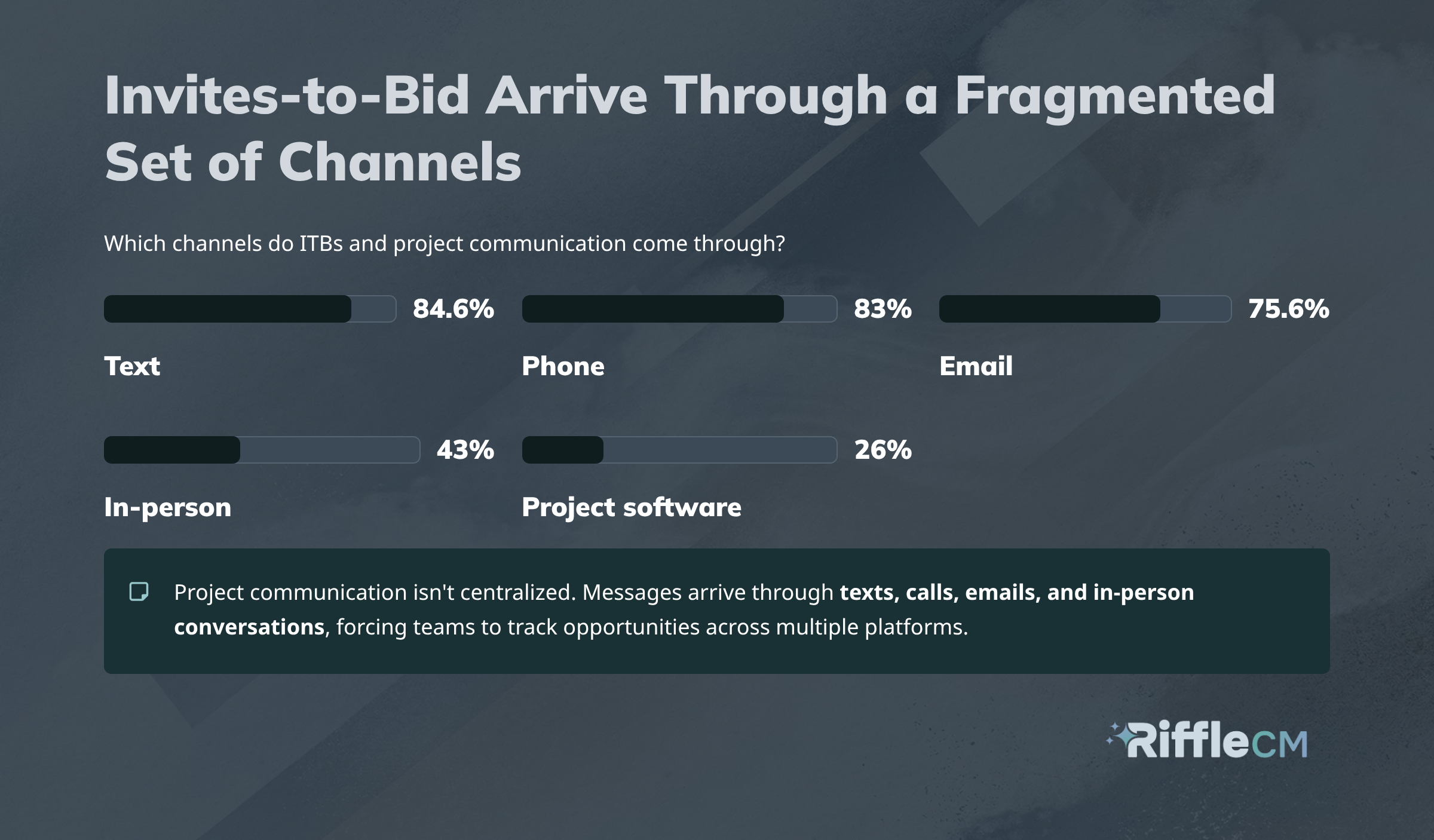
Survey respondents reported receiving project communication across multiple channels, including:
- Text messages
- Phone calls
- In-person conversations
- Project management software
Text messages and phone calls were the most common channels overall. While these tools are convenient, they also create fragmentation. Information gets scattered across platforms, making it difficult for teams to maintain a clear record of conversations and project decisions.
“A lot of communication comes through my phone as texts, and it’s easy for things to get buried.” — Survey Respondent
Phone Calls Create the Most Disruption
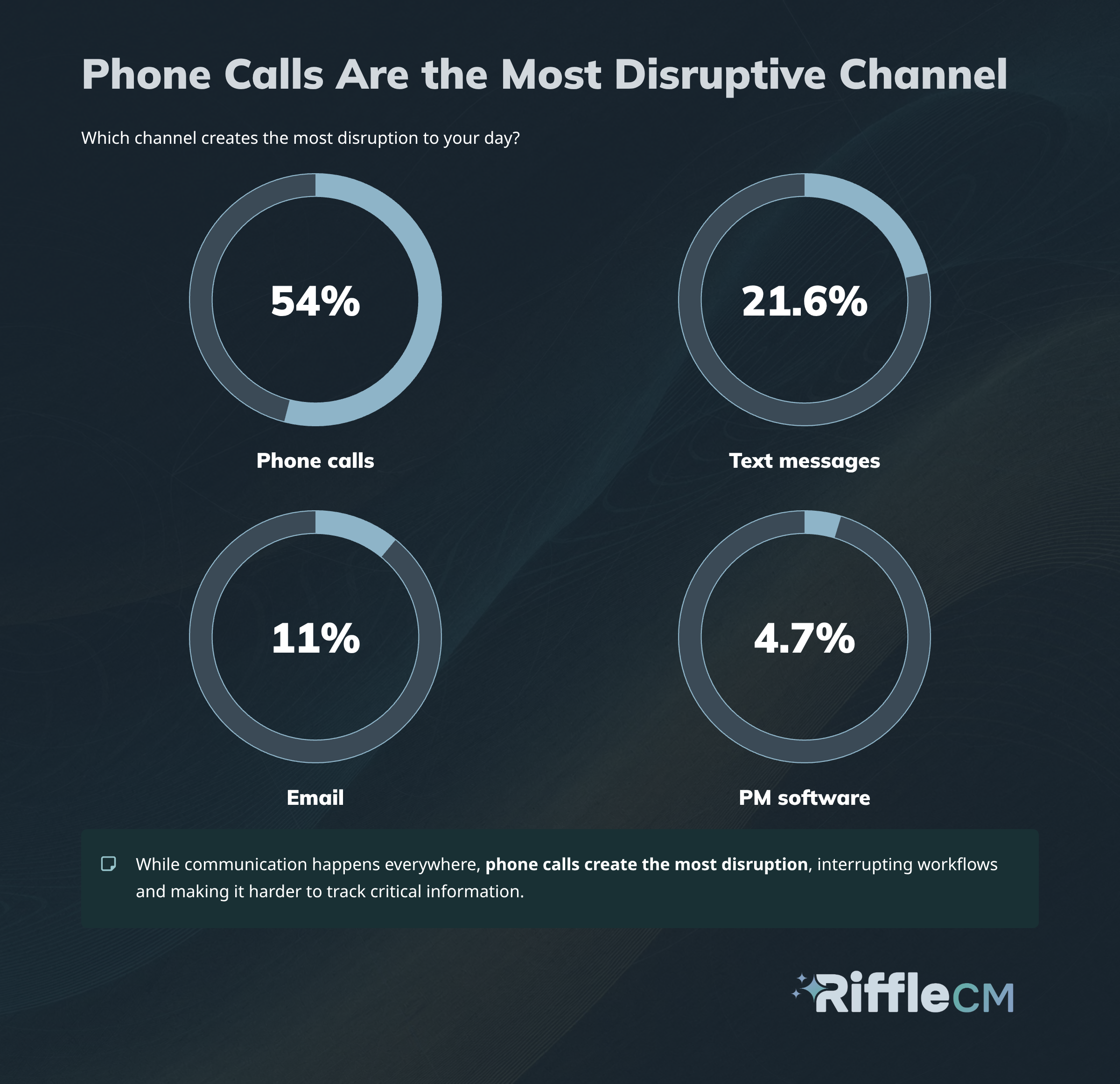
While communication happens across many channels, phone calls were identified as the most disruptive to daily workflows. More than half of respondents said phone calls interrupt their work more than any other communication channel.Unlike emails or software notifications, phone calls demand immediate attention and often interrupt ongoing tasks.
For teams juggling multiple projects, these interruptions add up quickly.
“When everyone comes at once, it slows everything down.” — Survey Respondent
Communication Overload Is a Common Experience
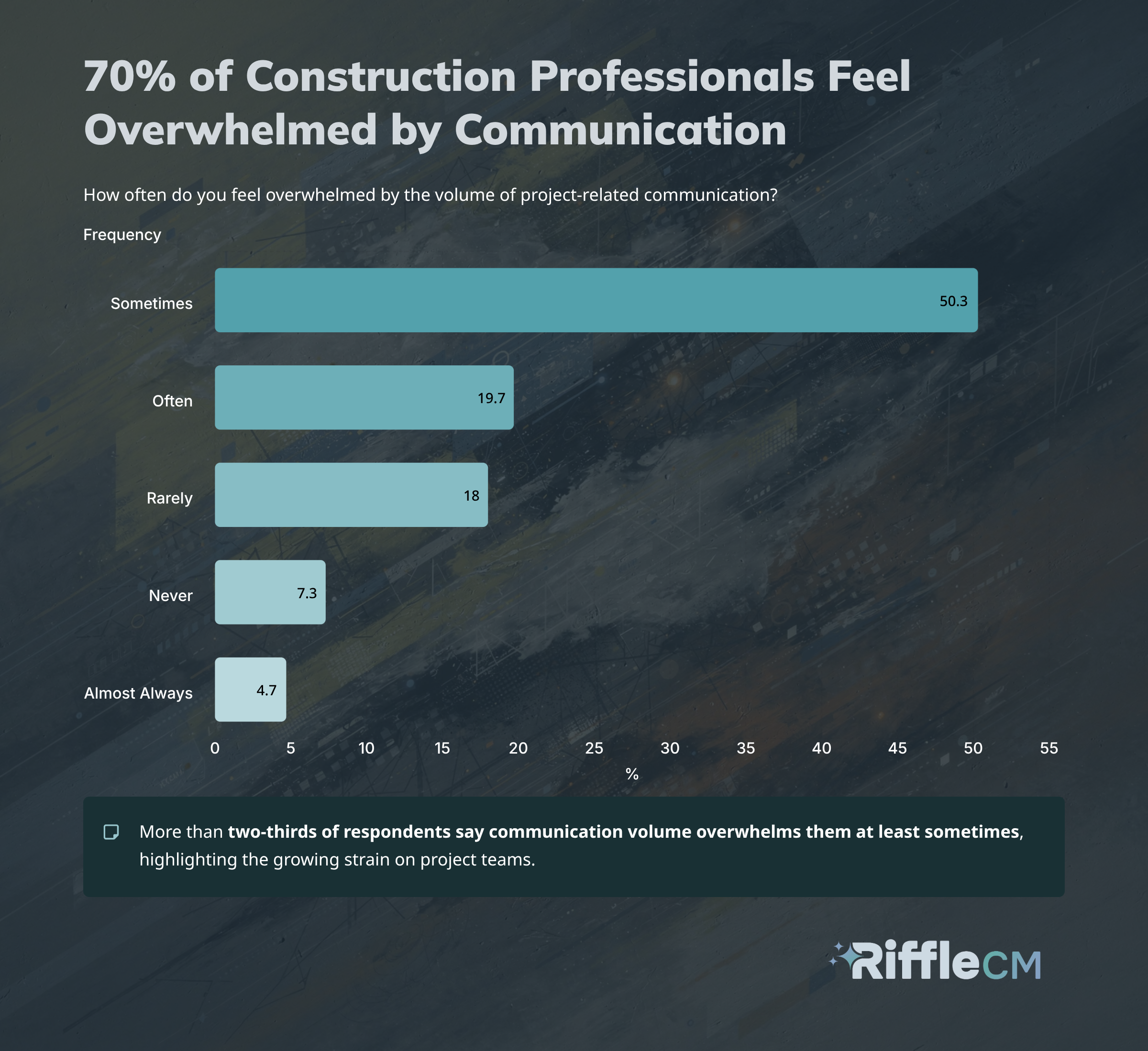
When asked how often they feel overwhelmed by communication volume, the majority of respondents reported feeling overwhelmed at least sometimes. In fact, nearly 70% of respondents said they experience communication overload sometimes or often.
This suggests that communication overload isn’t an occasional problem... it’s becoming part of everyday work in construction.
Important Details Are Getting Missed
When communication volume increases, important details can slip through the cracks.
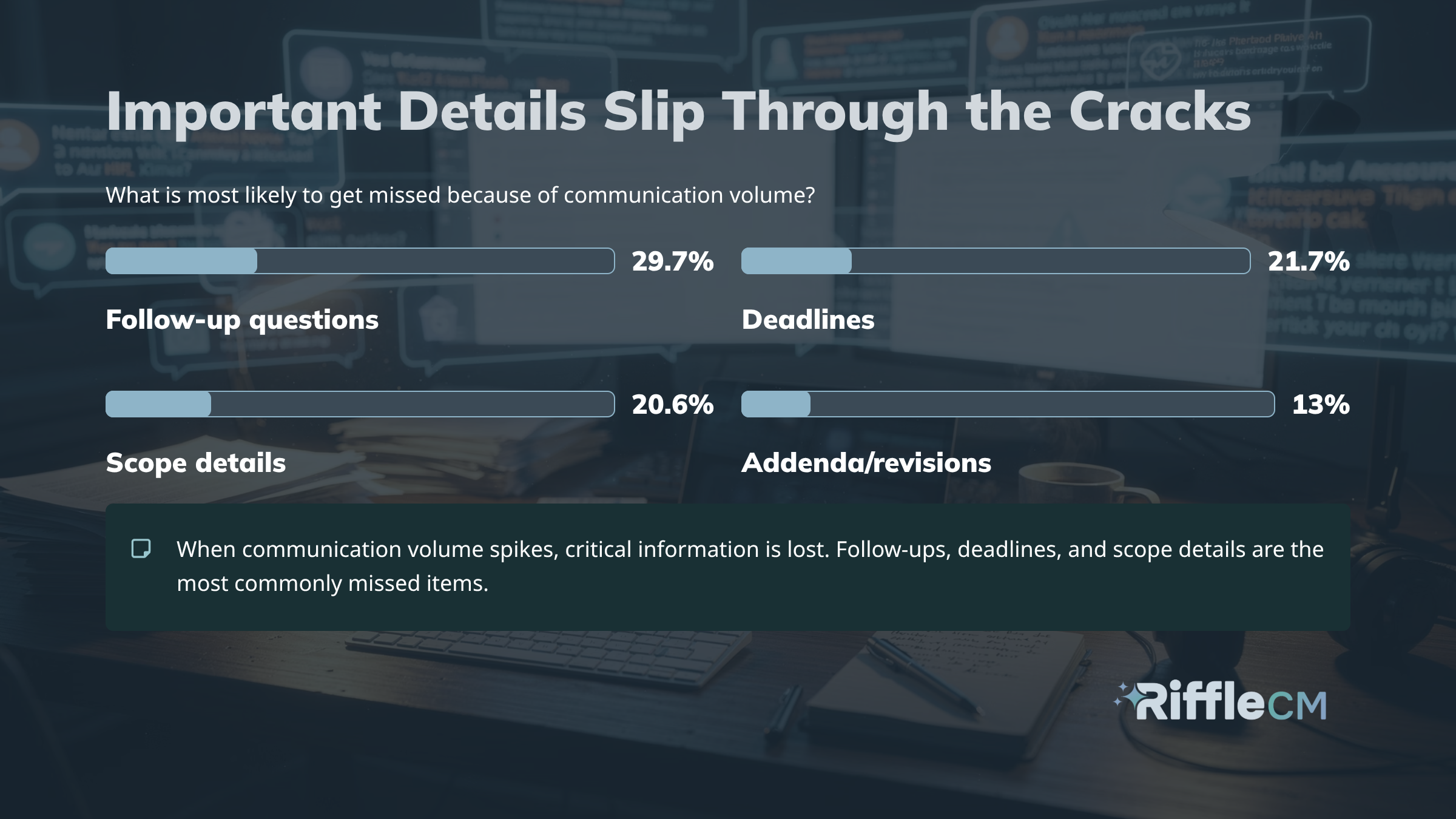
Survey respondents reported commonly missing:
- Follow-up questions
- Bid deadlines
- Scope details
- Project revisions or addenda
Each of these issues can create delays, confusion, or missed opportunities. In a fast-moving industry where timelines and margins matter, missing information can quickly become expensive.
"The hardest part is making sure I get all the details and specifics without missing something important.” — Survey Respondent
Teams Are Building Workarounds
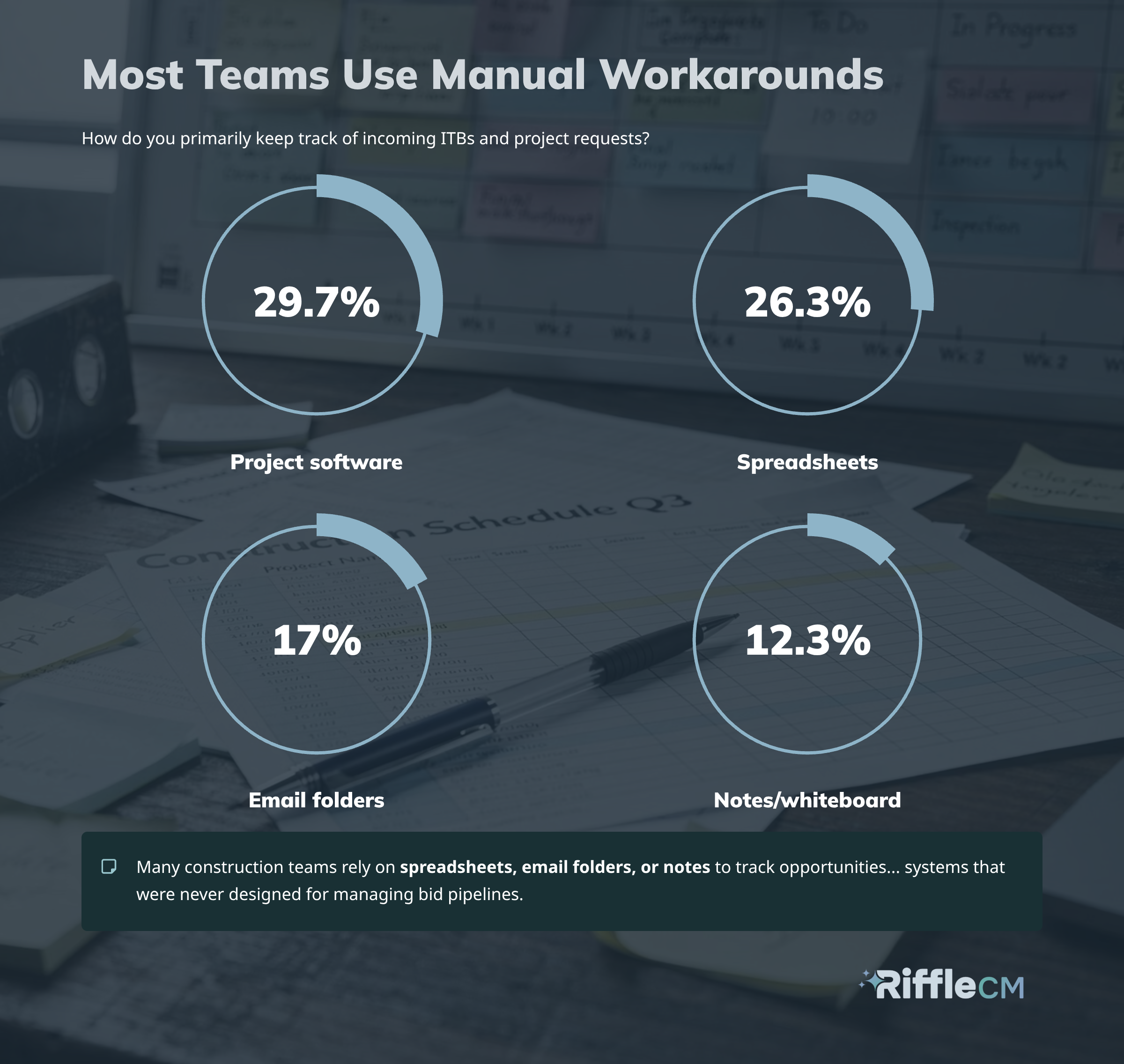
Most construction teams don’t have a dedicated system for managing communication and tracking bid opportunities.
Instead, many rely on manual workarounds, including:
- Spreadsheets
- Email folders
- Personal notes
- Whiteboards
While these systems can work temporarily, they require constant upkeep and often break down as communication volume increases. Many teams find themselves constantly reacting to incoming messages rather than managing opportunities proactively.
“There’s not enough automation. Too much of it is manual.” — Survey Respondent
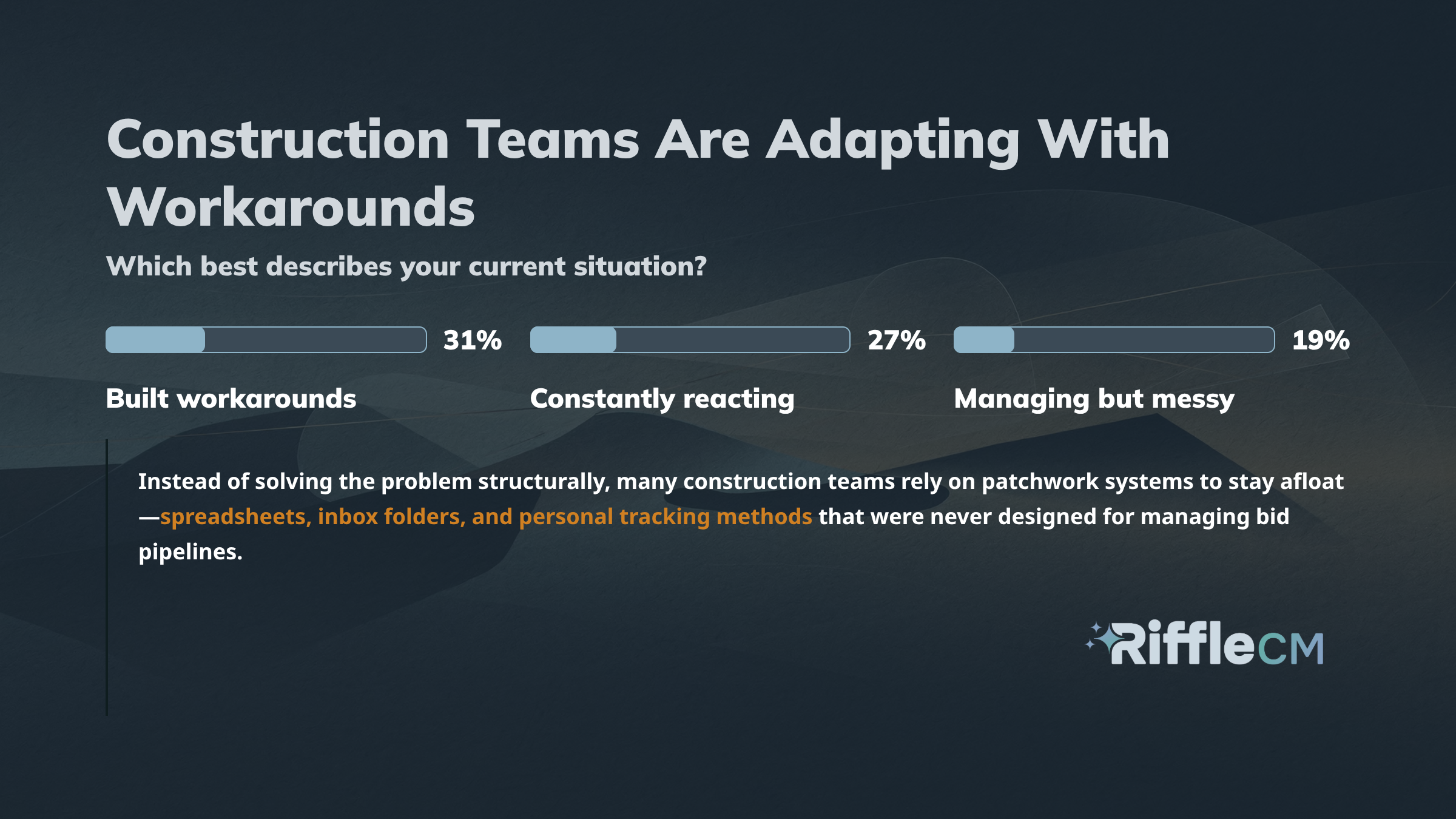
When communication volume increases, most construction teams don’t immediately adopt new systems. Instead, they adapt by building workarounds.
Our survey found that 31% of respondents say they’ve created their own systems to manage communication, often using spreadsheets, inbox folders, notes, or informal processes. Another 27% report that they are constantly reacting to incoming messages, while 19% say their current approach works but still feels messy or disorganized.
These results suggest that many teams recognize the communication overload problem but are managing it through patchwork solutions rather than structural changes. Over time, these workarounds can become difficult to maintain as projects grow, communication channels multiply, and message volume increases.
The Bigger Problem
Construction teams don’t have a communication problem. They have a communication overload problem. Messages arrive through texts, calls, emails, and software alerts. Important information gets buried. Opportunities get missed. As the industry continues to adopt new tools and platforms, the number of communication channels will only increase.
Without better systems for organizing and managing project communication, teams will continue to rely on fragmented workarounds.
Conclusion
Communication is the backbone of every construction project. But when communication becomes overwhelming, it stops helping teams move faster, and starts slowing them down. The industry doesn’t need more messages. It needs better ways to manage them.
About RiffleCM
RiffleCM helps subcontractors bring order to communication chaos by centralizing invite-to-bid emails and project opportunities in one place. Instead of digging through inboxes and spreadsheets, teams can track bids, deadlines, and project details in a single system.
Built by subcontractors, for subcontractors, RiffleCM is designed to help teams stay organized, respond faster, and never miss an opportunity.
Eliminating Manual Errors in Construction Bids
Common questions about reducing errors and improving accuracy
What causes most manual errors in subcontractor bids?
Manual errors usually come from disconnected workflows — things like outdated spreadsheets, inconsistent templates, or rekeying the same data multiple times. When project info lives across emails, texts, and PDFs, small mistakes add up fast.
How can software help reduce bidding mistakes?
Purpose-built estimating software automates repetitive tasks like data entry, quantity takeoffs, and revision tracking. Instead of chasing down the latest drawings or retyping costs, your team works from one centralized, accurate system — cutting errors before they happen.
Is automation complicated to set up for small subcontractors?
Not with modern tools like Riffle. You can connect your email or ITB inbox in minutes, and automation starts working behind the scenes — identifying bid invites, tracking updates, and helping you prioritize the right opportunities. No IT department required.
How much time can automation actually save?
Most subcontractors save 6–10 hours per week just by eliminating manual re-entry and version confusion. That’s more time for estimating the next job, reviewing margins, or simply getting home on time.
Does automating bids mean losing control over pricing?
Not at all. Automation handles the busywork — you keep full control over pricing, scope, and judgment calls. Think of it as an assistant that gets the numbers right so you can focus on strategy.
How do I know if my team is underspending or overspending on software?
A good rule of thumb: most subcontractors invest 1–3% of annual revenue in digital tools. If you’re still running bids manually or using outdated systems, the real cost might be hidden in lost time and missed opportunities.
Why does accuracy matter so much in bidding?
Every error compounds — one missed line item or miscalculated rate can erase your entire profit margin. Accuracy doesn’t just win jobs; it protects your business from losses you don’t see coming.
How does Riffle help subcontractors eliminate manual work?
Riffle automates your bidding and project workflows from start to finish. It finds ITBs in your inbox, organizes bid invites, fills in estimating data, and tracks updates — helping subcontractors bid smarter, reduce errors, and grow revenue.
We Understand the Bottlenecks for Subs

My biggest weakness has always been follow-ups—I’m just not great at it. If I had a built-in reminder feature to follow up on projects automatically, that would be a game-changer. I’ve gotten better, but I could still use that extra nudge.
Quoting can be chaotic. You have five different contractors sending out the same bid invite, each named differently. We end up with duplicate bids on the board or miss one entirely because it was labeled another way. There is no clear procedure when invites come in from multiple people.